
The housing markets of Hanoi and Ho Chi Minh City are entering a new supply cycle for 2026 – 2030 as the legal framework has been unblocked, but demand will be held back by high interest rates over the next 1 – 2 years. That is the main conclusion of iCapital's Residential Real Estate Report, published on 09/04/2026:
| Indicator (annual average, 2026F – 2030F) | Hanoi | Ho Chi Minh City |
|---|---|---|
| Owner-occupier demand | ~32,000 units | ~50,000 units |
| Investment demand | ~20,000 units | ~55,000 units |
| Total demand | ~52,000 units | ~105,000 units |
| Projected new launches | ~125,000 units (2026 – 2027); ~390,000 units (2028 – 2030) | ~40,000 units (2026 – 2028) |
| Supply – demand balance | Broadly balanced in 2026 – 2027; oversupply > 100,000 units/year in 2028 – 2030 | Undersupply in 2026 – 2028; oversupply risk after the new Housing Programme |
| Key infrastructure 2026 – 2035 (total investment) | ~VND 2.6 quadrillion | ~VND 722 trillion |
1. Monetary policy: little room left for easing
Strong credit growth over the past five years has channelled capital into real estate and left the banking system short of liquidity. iCapital believes high interest rates are likely to persist for the next 1 – 2 years, and that monetary policy will aim to slow credit flowing into real estate.
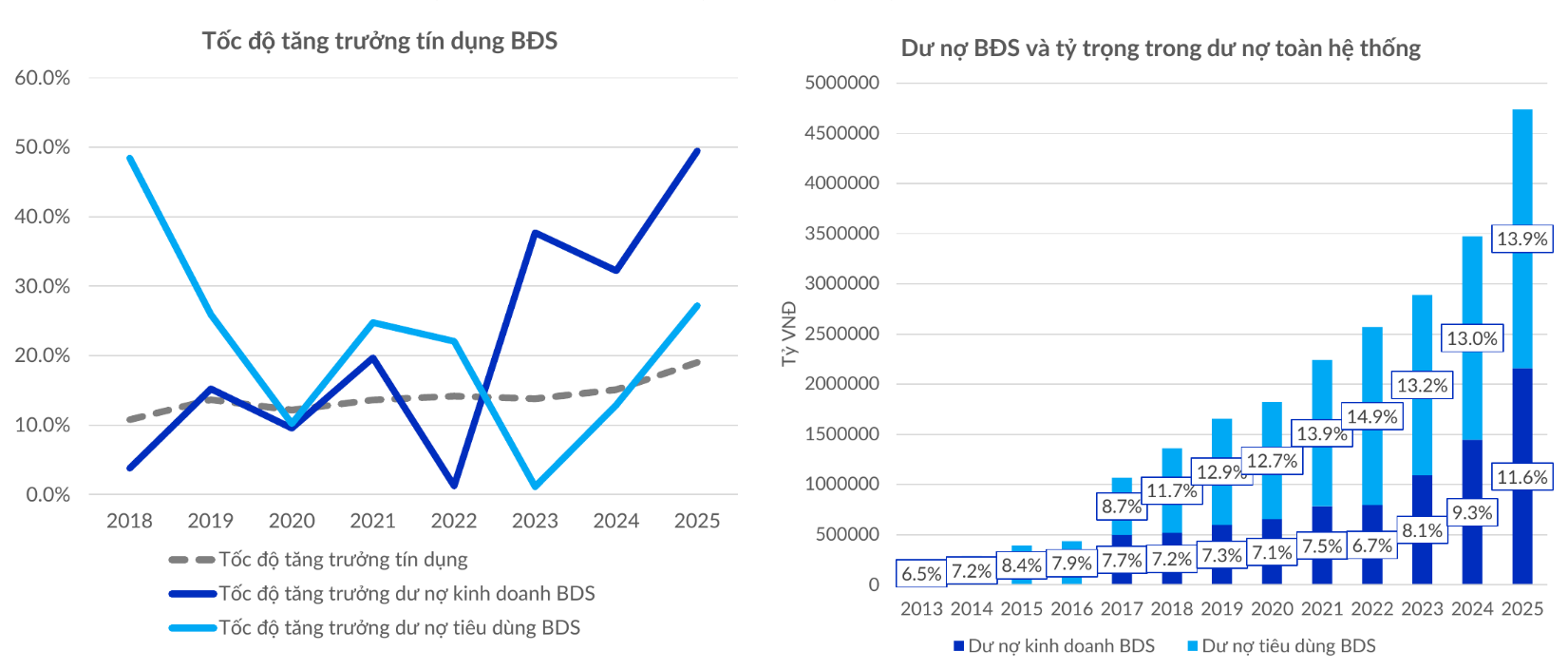 Chart 1 – Real estate business loans (lending to developers) grew 1.5 times in three years; total real estate lending accounted for ~13.9% of system-wide credit in 2025. Source: iCapital compilation, SBV.
- Leverage concentrated on developers: real estate business lending grew far faster than overall credit in 2023 – 2025, while real estate consumer lending (to homebuyers) grew more slowly.
- High cost of capital: deposit rates of 8 – 9% and typical mortgage rates of 12 – 14% a year weigh on purchasing power, especially among buyers purchasing for investment.
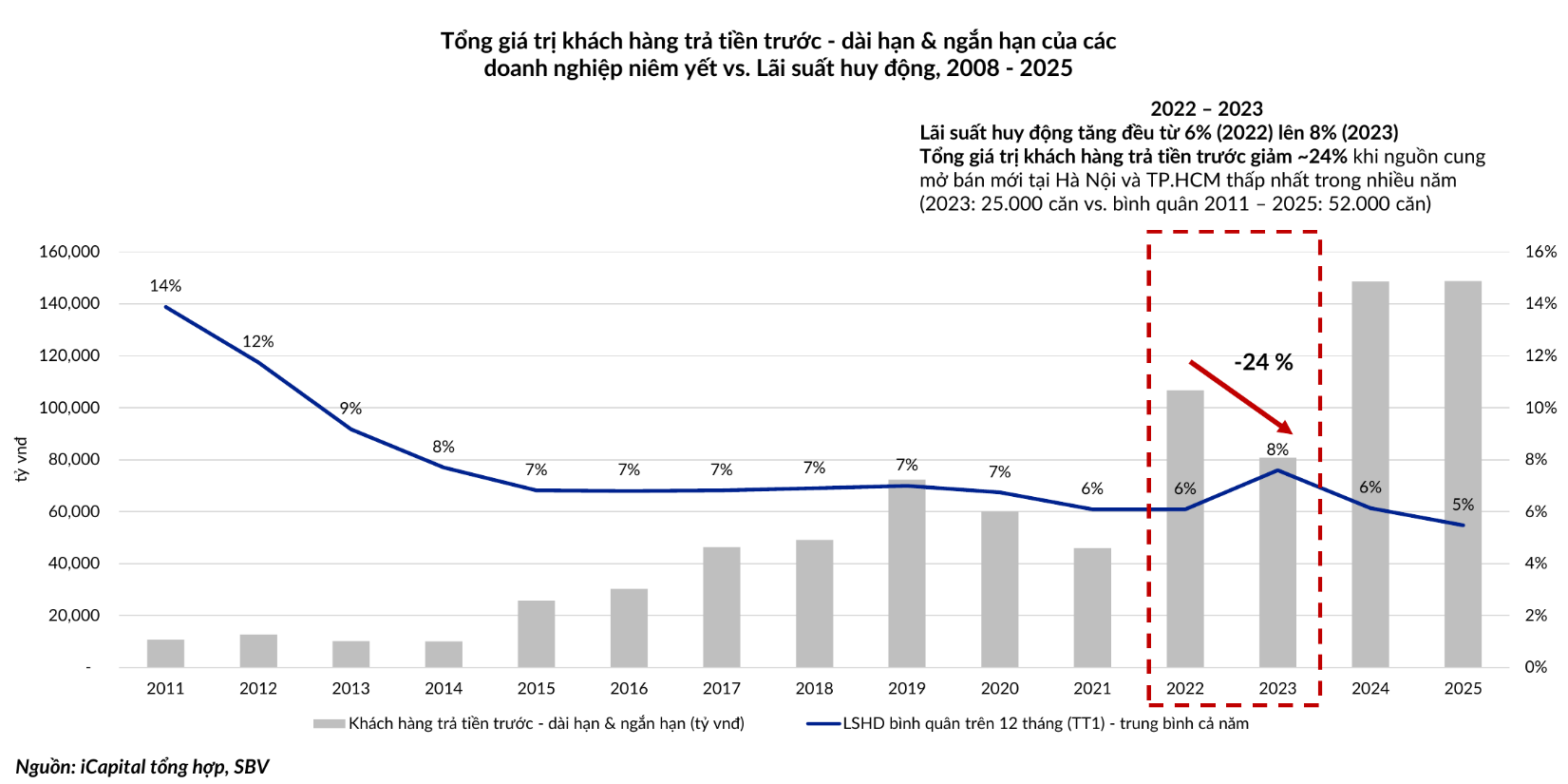 Chart 2 – When deposit rates rose from 6% (2022) to 8% (2023), total customer advances at listed real estate companies fell by ~24%. Source: iCapital compilation, SBV.
The 2022 – 2023 cycle is the most recent test: new launches in Hanoi and Ho Chi Minh City fell to only ~25,000 units in 2023, compared with an average of ~52,000 units a year in 2011 – 2025. Over the longer term, the report notes that Vietnam's growth model, which relies on bank credit, shares similarities with Malaysia and Thailand in the 1980s – 1990s.
2. Fiscal policy: public investment drives urban decentralisation
With monetary policy out of room, fiscal policy becomes the main growth tool for the new term. Vietnam's public debt stood at ~31.3% of GDP (2024), low compared with the region and below the 2008 – 2012 period, both in debt ratio and in government borrowing costs. State budget borrowing needs for 2026 – 2030 rise sharply, driven mainly by foreign borrowing and short-term top-up sources (3-year government bonds).
This capital flows into key infrastructure for 2026 – 2035, with total investment of ~VND 2.6 quadrillion in Hanoi and ~VND 722 trillion in Ho Chi Minh City, to deliver on the goal of moving population out of the urban core.
| Key project | Location | Total investment (VND billion) | Timeline |
|---|---|---|---|
| Urban railway (14 lines) | Hanoi | ~1,500,000 | Line 3 Nhon – Hanoi Station fully operational ~2027 |
| Red River landscape boulevard (~80 km) | Hanoi | ~855,000 | Expected 2030 |
| 16 bridges and tunnels across the Red River | Hanoi | ~240,000 | 2027 – 2035 |
| Ring Road 4, Ho Chi Minh City (159 km section) | Ho Chi Minh City | ~120,413 | Construction starts Jun – Sep 2026, completion 2028 – 2029 |
| Ring Road 3, Ho Chi Minh City (76.3 km) | Ho Chi Minh City | ~75,378 | Target opening 2026 |
| Thu Dau Mot – Chon Thanh Expressway | Ho Chi Minh City | ~21,520 | 2026 – 2028 |
3. Total demand 2026 – 2030: solid owner-occupier base, investment demand under rate pressure
iCapital estimates average housing demand at ~52,000 units a year in Hanoi (growing ~1.5% a year) and ~105,000 units a year in Ho Chi Minh City (growing ~1.9% a year), made up of two components.
Owner-occupier demand (Hanoi ~32,000 units/year; Ho Chi Minh City ~50,000 units/year)
- Natural population growth: 0.95% a year (Hanoi) and 0.92% a year (Ho Chi Minh City), above the national average of 0.70% a year. Vietnam's 2024 population pyramid resembles China's in 2000, with the 25 – 40 age group now at home-buying age.
- Migration: contributes 0.34% a year (Hanoi) and 0.91% a year (Ho Chi Minh City). The urbanisation rate is expected to rise from ~40% to ~60% over 15 years; the two cities are at a stage similar to Shenzhen in 2000 – 2010, when net migration levelled off.
- Household formation: average household size fell from 3.83 people (2009) to 3.59 and is assumed to remain stable until 2030.
Investment demand (Hanoi ~20,000 units/year; Ho Chi Minh City ~55,000 units/year)
- Savings rate of 46 – 51%; household wealth grows ~7% a year (Hanoi) and ~5% a year (Ho Chi Minh City) in 2026 – 2030.
- The base case assumes 21% of wealth is allocated to real estate (in line with Asia-Pacific) and a market-wide LTV of 50%; the low and high cases use 11% and 31%.
- In Hanoi, base-case investment demand is lower than in 2024 – 2025 because of high interest rates in 2026 – 2028.
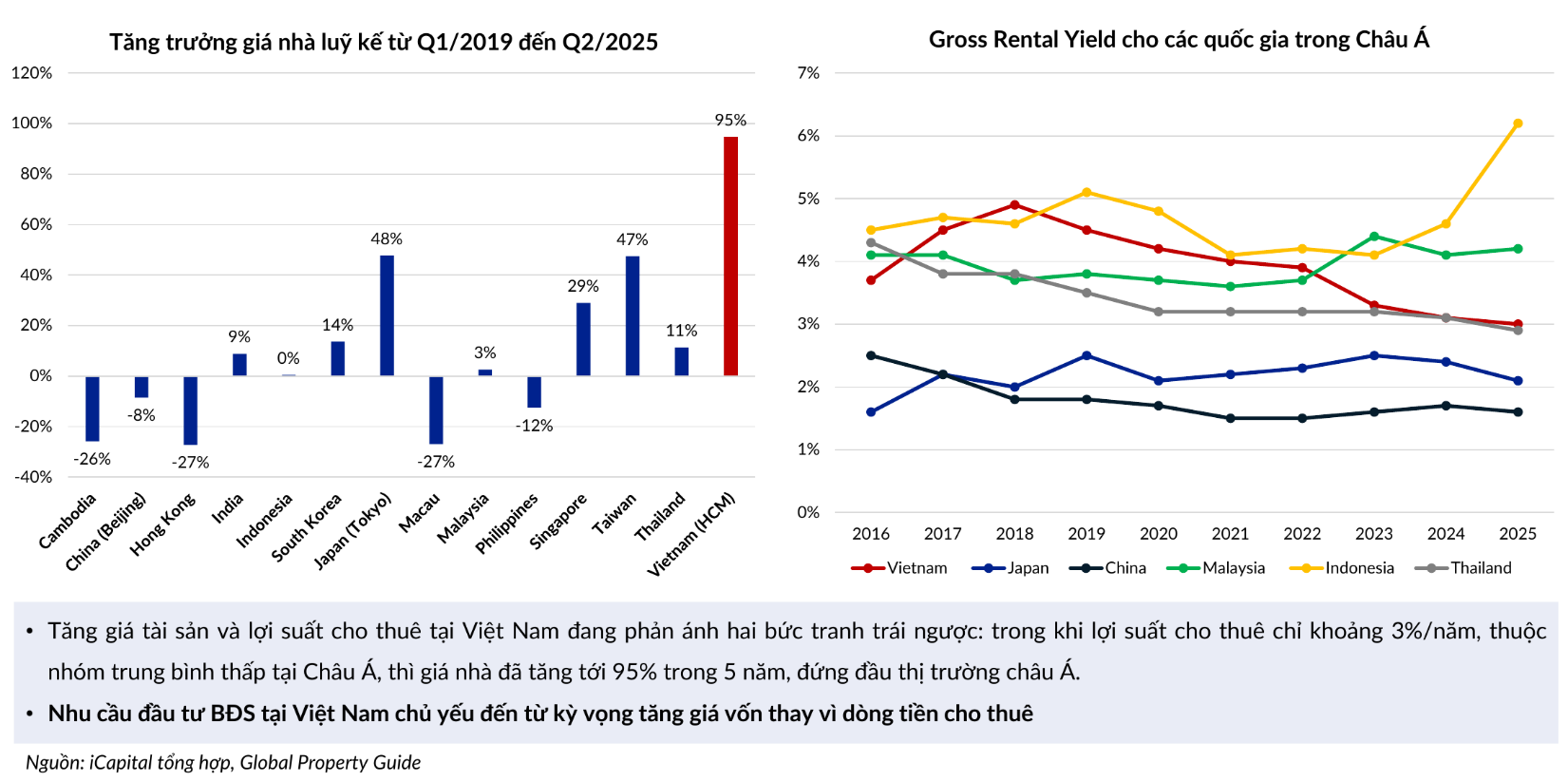 Chart 3 – Vietnamese house prices rose ~95% from Q1/2019 to Q2/2025, the highest in Asia, while gross rental yields are only ~3% a year. Investment demand relies mainly on expected capital gains rather than rental cash flow. Source: iCapital compilation, Global Property Guide.
4. Total supply 2026 – 2030: legal reform unlocks a large launch cycle
New launches in Hanoi and Ho Chi Minh City are projected to rise to ~165,000 units a year in 2026 – 2027 and ~390,000 – 430,000 units a year in 2028 – 2030, compared with ~25,000 units in 2023.
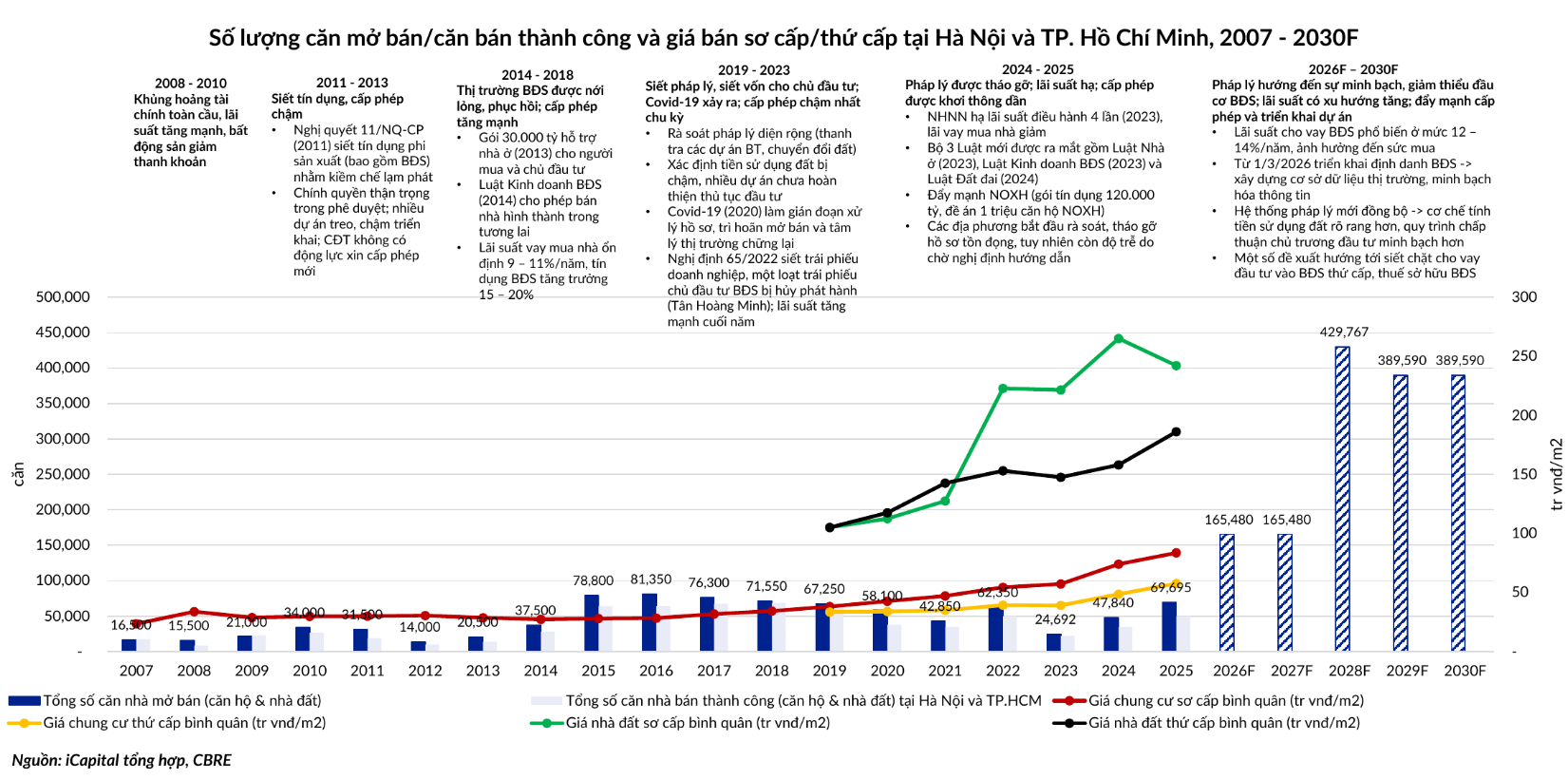 Chart 4 – Housing cycles track the legal framework, credit and licensing: units launched/sold and primary/secondary prices in Hanoi and Ho Chi Minh City, 2007 – 2030F. Source: iCapital compilation, CBRE.
- Legal bottlenecks removed: the Housing Law (2023), the Real Estate Business Law (2023) and the Land Law (2024) abolish the land price framework, allow PPP projects to be paid with land (BT contracts revived from 01/07/2025) and make land recovery more flexible. Resolution 171/2024/QH15 permits commercial housing on land not zoned for residential use; Hanoi and Ho Chi Minh City have piloted ~500 land plots.
- Hanoi: apartments expected at ~167,000 units a year (2024 – 2025: ~34,400 units a year); landed housing ~116,500 units a year, or ~46,800 units a year excluding Vinhomes Olympic.
- Ho Chi Minh City: apartments ~31,700 units a year in 2026 – 2028; landed housing stable at ~7,600 units a year, mainly in outlying areas (Hoc Mon, Can Gio, Long An).
- Shift to the suburbs: ~90% of Hanoi's supply lies outside Ring Road 3 (typical apartment prices of VND 50 – 70 million/m²); most of Ho Chi Minh City's lies outside Ring Road 2 (VND 40 – 60 million/m²). The market has lacked a mid-range segment for years, so prices in the urban core are unlikely to fall.
- Social housing: annual targets for 2026 – 2030 far exceed past launches (Ho Chi Minh City ~38,000 units a year versus ~5,200 units a year), but procedures can take ~500 days, so the risk of a social housing shortfall remains.
5. Supply – demand balance: two markets, two cycles
Hanoi faces oversupply risk from 2028, while Ho Chi Minh City remains undersupplied in 2026 – 2028.
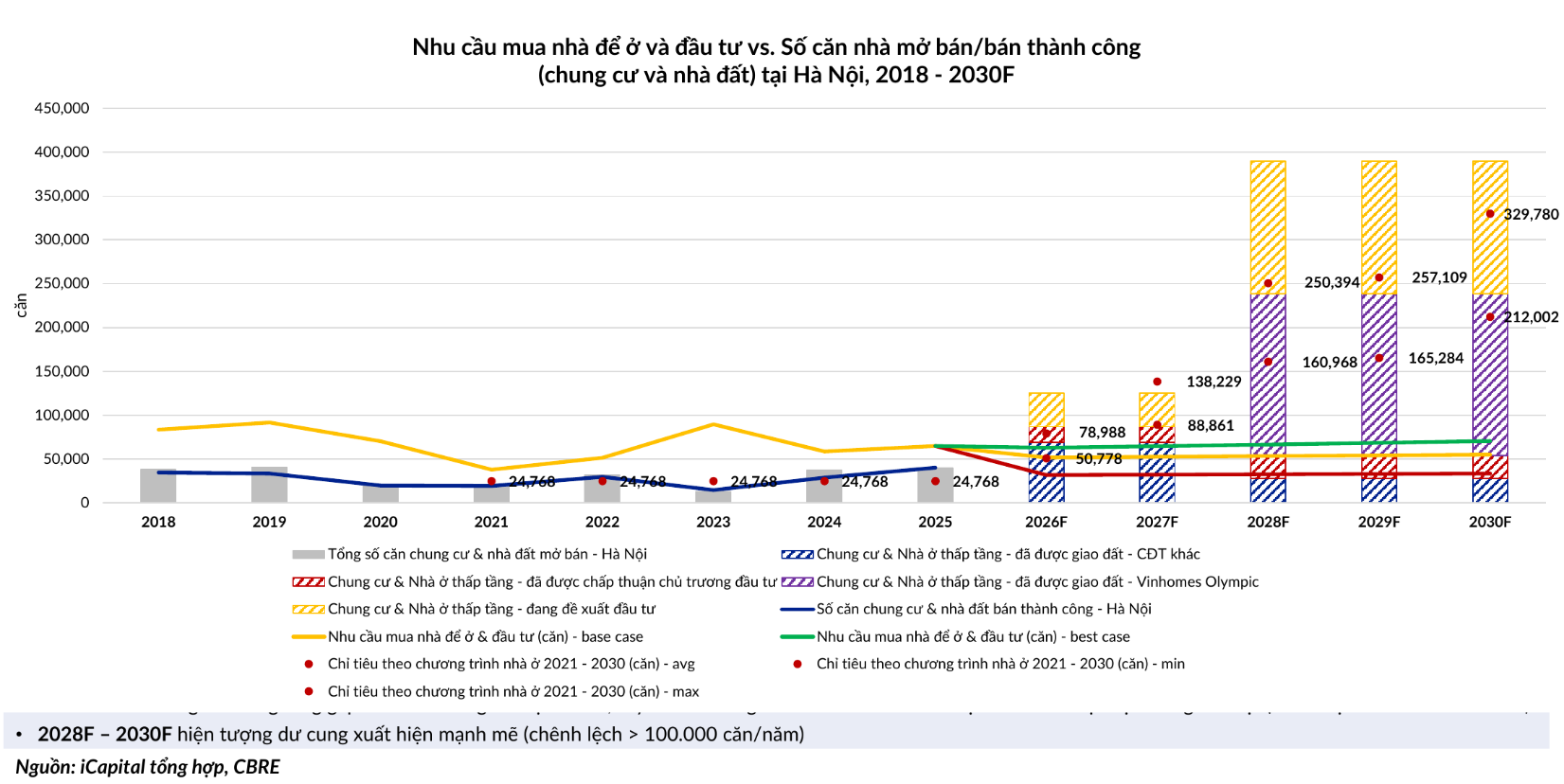 Chart 5 – Hanoi: in 2026 – 2027 supply triples compared with the previous period but stays relatively close to owner-occupier and investment demand (a gap of ~20,000 units a year); in 2028 – 2030 oversupply exceeds 100,000 units a year. Source: iCapital compilation, CBRE.
- In 2021 – 2025, Hanoi's commercial housing supply reached only ~61% of the Housing Programme target; much of it came from projects in Hung Yen province (Vinhomes Ocean Park 2 & 3, Alluvia City, Sunshine Legend City).
- The 2028 – 2030 wave depends heavily on projects that are proposed or have only just received investment approval, including Vinhomes Olympic, so actual progress is the key variable.
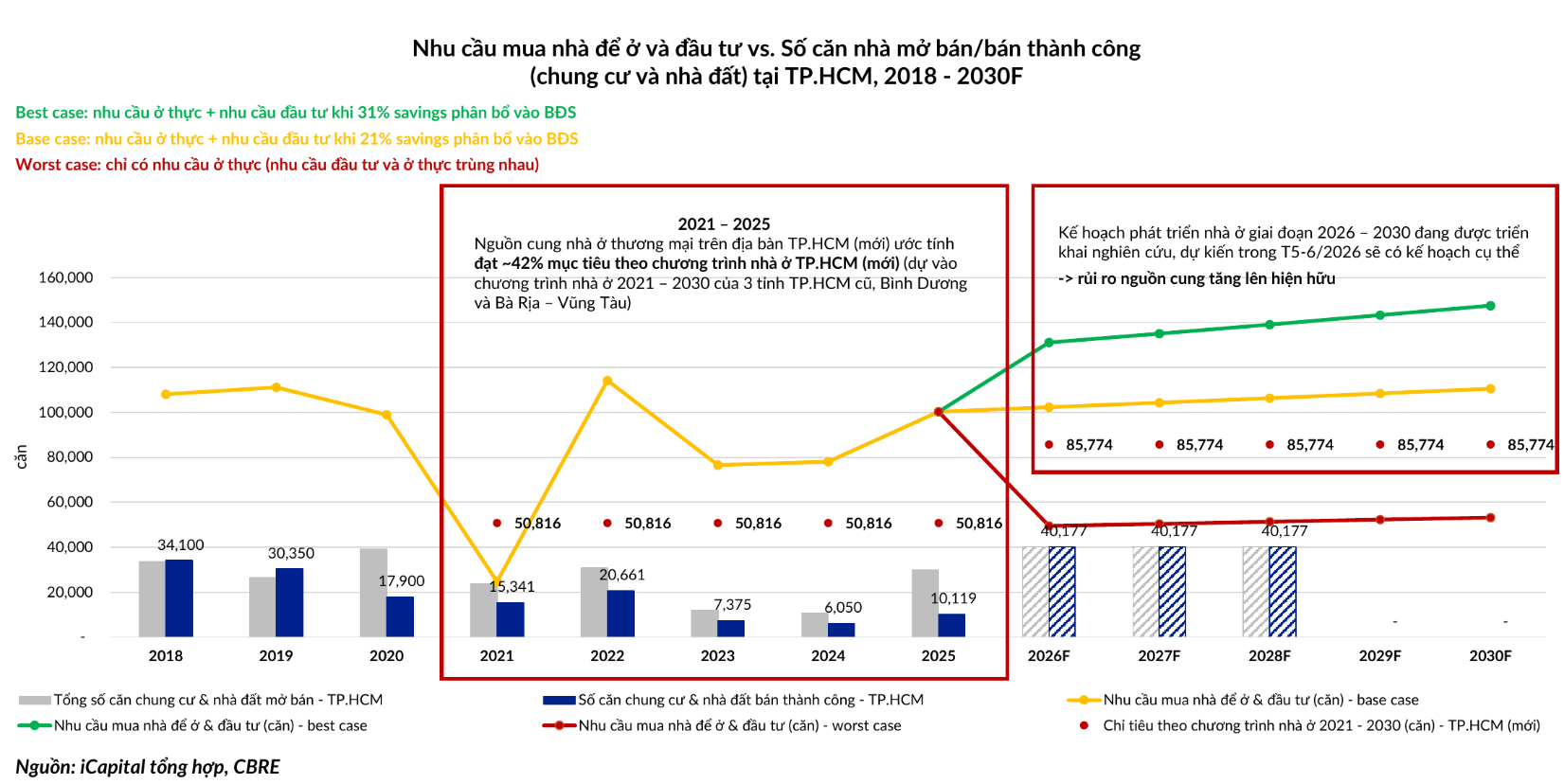 Chart 6 – Ho Chi Minh City: projected supply of ~40,000 units a year in 2026 – 2028, well below demand of ~105,000 units a year (base case). Source: iCapital compilation, CBRE.
- In 2021 – 2025, Ho Chi Minh City's commercial housing supply (new boundaries, including Binh Duong and Ba Ria – Vung Tau) reached only ~42% of target.
- The 2026 – 2030 housing development plan is expected to be finalised in May – June 2026; once approved, the oversupply risk for 2028 – 2030 will become real, as in Hanoi.
- Part of owner-occupier demand in both cities will be absorbed by social housing, narrowing the room for the commercial segment.
6. Large developers: land bank advantage, balance sheet pressure
Large groups hold a decisive advantage in the new cycle thanks to their ability to build BT infrastructure in exchange for land and to develop large suburban townships. In return, their committed investment is 3 – 4 times their cumulative total, while their financial ratios have already exceeded safe thresholds.
7. Investment view: variables to watch
- Interest rates determine the absorption pace: supply has been unlocked by legal reform, so the question for 2026 – 2028 is purchasing power. Deposit rates, mortgage rates and real estate credit growth are the three leading indicators.
- Divergence by location: Ho Chi Minh City has a more favourable supply – demand balance in the short term; in Hanoi, the actual launch pace of the 2028 – 2030 wave needs to be monitored.
- The advantage lies with well-located land: suburban projects with complete legal status, along ring roads and metro lines, and priced for owner-occupiers will benefit from the decentralisation trend.
- The balance sheet is the first filter: the "three red lines" are a simple test to separate companies able to weather a high-rate period from those dependent on rolling over debt.
- Policy risk: proposals to tighten lending for secondary real estate investment, a property ownership tax and property identification (from 01/03/2026) could reduce investment demand faster than expected.
Conclusion
The 2026 – 2030 cycle differs from previous ones in that the bottleneck has shifted from supply to the cost of capital. Legal reform has opened the way for a wave of large suburban projects, but cautious monetary policy and the high leverage of the leading groups tilt the game towards companies with clean land banks and healthy balance sheets.
This article summarises iCapital's Residential Real Estate Report (09/04/2026) to share a research perspective. It is not a recommendation to buy or sell any security. Projections may change as market conditions evolve.